Aron Laszka

Aron Laszka

Associate Professor
Pennsylvania State University

Aron Laszka is an Associate Professor in the College of Information Sciences and Technology at the Pennsylvania State University, where he directs the Applied Artificial Intelligence Lab. Before joining Penn State in 2022, he was an Assistant Professor at the University of Houston (2017 – 2022), a Research Assistant Professor at Vanderbilt University (2016 – 2017), and a Postdoctoral Scholar at the University of California, Berkeley (2015 – 2016).

His research focuses on machine learning for decision making and optimization, in particular reinforcement learning and learning-augmented combinatorial optimization, with applications in cyber-physical systems, such as transportation and power systems, and in cybersecurity. He is a recipient of the NSF CAREER Award. His research is funded by the National Science Foundation, the Department of Energy, the Department of Transportation, and other agencies.

SAGE: Similarity-Based Cleaning of Poisoned Training Data from Verified Examples

As machine learning increasingly relies on public, untrusted data sources, data poisoning attacks, which inject malicious examples into training data to induce misclassification of …

avatar
Chaeeun Han
ICDM MLC 2026

Control Barrier Function Based Speed Control for Fixed-Line Transit Headway Management

We present a control barrier function (CBF) approach for headway management in fixed-line transit systems (FTLSs) through vehicular speed control. We frame headway management as a …

avatar
George Gunter
ITSC 2026

Computing Headway Bounds Under Worst-Case Bunching in Fixed-Line Transit Systems

Vehicle bunching is a major problem for transit operators. When vehicles bunch together, the lead vehicle will service the majority of passenger demand, leaving the following …

Michael Yuhas
RTCSA 2026

Column Generation for the Micro-Transit Zoning Problem

Along with the rapid development of new urban mobility options like ride-sharing over the past decade, on-demand micro-transit services stand out as a middle ground, bridging the …

Hins Hu
IJCAI 2026
NSF CAREER: Scaling Deep Reinforcement Learning for Societal-Scale Cyber-Physical Systems featured image

NSF CAREER: Scaling Deep Reinforcement Learning for Societal-Scale Cyber-Physical Systems

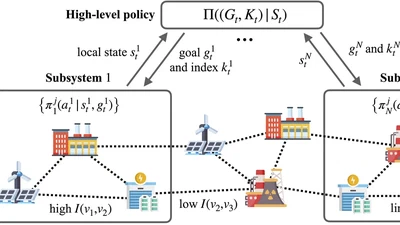
This project will develop artificial intelligence techniques to improve the operation of large-scale infrastructure systems, such as smart transportation networks and electric power grids, which are essential to modern life. These complex systems, known as societal-scale cyber-physical systems, integrate physical infrastructure with thousands of sensors, computing devices, and actuators. Due to their scale and distributed nature, managing these systems in real time poses a significant challenge. To address this challenge, the project will leverage deep reinforcement learning, a form of artificial intelligence that learns optimal decision-making strategies directly from data. By improving the efficiency and reliability of critical infrastructure systems, the research will further the national interest through reducing traffic congestion, improving emergency response times, and increasing the stability of the power grid.

2026 – 2031 Read more

MoveOD: Synthesizing Origin-Destination Commute Distribution from U.S. Census Data

High-resolution origin–destination (OD) tables are essential for a wide spectrum of intelligent transportation systems applications, from modeling traffic and signal timing …

Rishav Sen
ICCPS 2026

Dynamic Vehicle Routing Problem with Prompt Confirmation of Advance Requests

Transit agencies that operate on-demand transportation services have to respond to trip requests from passengers in real time, which involves solving dynamic vehicle routing …

avatar
Amutheezan Sivagnanam
ICCPS 2026

Adversarial Reinforcement Learning for Detecting False Data Injection Attacks in Vehicular Routing

In modern transportation networks, adversaries can manipulate routing algorithms using false data injection attacks, such as simulating heavy traffic with multiple devices running …

avatar
Taha Eghtesad
ICCPS 2026

Ensemble Prediction of Task Affinity for Efficient Multi-Task Learning

A fundamental problem in multi-task learning (MTL) is identifying groups of tasks that should be learned together. Since training MTL models for all possible combinations of tasks …

avatar
Afiya Ayman
ICLR 2026

AI for Smart Transportation

Public transportation systems worldwide face persistent challenges of efficiency, reliability, and sustainability. In this chapter, we explore how AI-powered approaches can …

Michael Wilbur
Artificial Intelligence and Society, 2026