Chaeeun Han

Chaeeun Han

Ph.D. Student
Pennsylvania State University
Chaeeun Han joined the Applied Artificial Intelligence Lab as a Ph.D. student in August 2022. With an undergraduate background in Library & Information Science and Statistics from Sungkyunkwan University in South Korea, her research interests span Data Science, Adversarial Machine Learning, and Deep Learning. Her current research focuses on developing robust defenses against data poisoning attacks.
Data Science Adversarial Machine Learning Deep Learning

SAGE: Similarity-Based Cleaning of Poisoned Training Data from Verified Examples

As machine learning increasingly relies on public, untrusted data sources, data poisoning attacks, which inject malicious examples into training data to induce misclassification of …

avatar
Chaeeun Han
•

An End-to-End Solution for Public Transit Stationing and Dispatch Problem

Public bus transit systems provide critical transportation services for large sections of modern communities. On-time performance and maintaining the reliable quality of service is …

Jose Paolo Talusan
•
Fixed-Line Transit 2.0: Real-Time Optimization of High-Frequency Transit Service featured image

Fixed-Line Transit 2.0: Real-Time Optimization of High-Frequency Transit Service

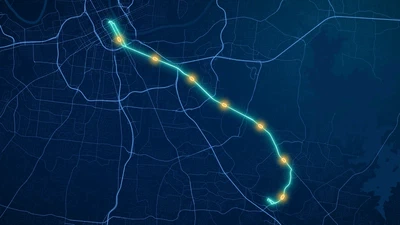
This project will develop and deploy a real-time, AI-driven decision support system that makes high-frequency bus service more reliable by anticipating and proactively mitigating delays, overcrowding, and service disruptions. Frequent, high-ridership bus routes are inherently unstable: when a bus falls behind, it encounters more waiting passengers and falls even further behind, until buses bunch together and leave long gaps in service, causing longer and less predictable waits, overcrowding, and missed transfers. The project focuses on WeGo Public Transit’s Route 55 Murfreesboro in Nashville, Tennessee, WeGo’s busiest route with nearly 5,000 weekday boardings, but also its least reliable one: more than 1 in 4 buses are either bunched or gapped, adding up to over 105 hours of excess waiting time for passengers every weekday.

Forecasting and Mitigating Disruptions in Public Bus Transit Services

Public transportation systems often suffer from unexpected fluctuations in demand and disruptions, such as mechanical failures and medical emergencies. These fluctuations and …

avatar
Chaeeun Han
•
Best Paper Award

An Online Approach to Solving Public Transit Stationing and Dispatch Problem

Public bus transit systems provide critical transportation services for large sections of modern communities. On-time performance and maintaining the reliable quality of service is …

Jose Paolo Talusan
•
Microtransit Solutions for Underserved Communities featured image

Microtransit Solutions for Underserved Communities

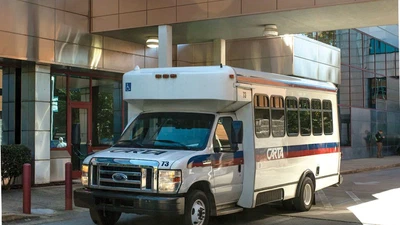
Public transportation infrastructure is an essential component in cultivating equitable communities. However, public transit agencies have historically struggled to achieve this since they are often severely stressed in terms of resources as they have to make the trade-off between concentrating service into routes that serve large numbers of people and spreading service out to ensure that people everywhere have access to at least some service. A solution that holds great promise for improving public transit systems is the integration of fixed-route services with microtransit systems: multi-passenger transportation services that serve passengers using dynamically generated routes and may expect passengers to make their way to and from common pick-up or drop-off points. However, most microtransit systems have failed in the past due to the lack of community engagement, inability to handle the uncertainty of operations when integrating the fixed transit, and inability to handle the system-level optimization challenges.