Aron Laszka

Aron Laszka

Associate Professor
Pennsylvania State University

Aron Laszka is an Associate Professor in the College of Information Sciences and Technology at the Pennsylvania State University. Previously, he was an Assistant Professor at the University of Houston, a Research Assistant Professor at Vanderbilt University, and a Postdoctoral Scholar at the University of California, Berkeley.

His research interests revolve around artificial intelligence and cyber-physical systems, focusing on machine learning for decision making and optimization, with applications in smart and connected communities, critical infrastructure, and cybersecurity.

His research is funded by the National Science Foundation, the Department of Energy, the Department of Transportation, and other agencies.

A Privacy-preserving Mobile and Fog Computing Framework to Trace and Prevent COVID-19 Community Transmission

To slow down the spread of COVID-19, governments worldwide are trying to identify infected people, and contain the virus by enforcing isolation, and quarantine. However, it is …

Md Whaiduzzaman
IEEE Journal of Biomedical and Health Informatics, 2020
Microtransit Solutions for Underserved Communities featured image

Microtransit Solutions for Underserved Communities

Public transportation infrastructure is an essential component in cultivating equitable communities. However, public transit agencies have historically struggled to achieve this since they are often severely stressed in terms of resources as they have to make the trade-off between concentrating service into routes that serve large numbers of people and spreading service out to ensure that people everywhere have access to at least some service. A solution that holds great promise for improving public transit systems is the integration of fixed-route services with microtransit systems: multi-passenger transportation services that serve passengers using dynamically generated routes and may expect passengers to make their way to and from common pick-up or drop-off points. However, most microtransit systems have failed in the past due to the lack of community engagement, inability to handle the uncertainty of operations when integrating the fixed transit, and inability to handle the system-level optimization challenges.

2020 – 2025 Read more

Mechanisms for Outsourcing Computation via a Decentralized Market

As the number of personal computing and IoT devices grows rapidly, so does the amount of computational power that is available at the edge. Since many of these devices are often …

Scott Eisele
DEBS 2020

Cyber-Attacks and Mitigation in Blockchain Based Transactive Energy Systems

Power grids are undergoing major changes due to the rapid adoption of intermittent renewable energy resources and the increased availability of energy storage devices. These trends …

Carlos Barreto
ICPS 2020
Addressing Transit Accessibility Challenges due to COVID-19 featured image

Addressing Transit Accessibility Challenges due to COVID-19

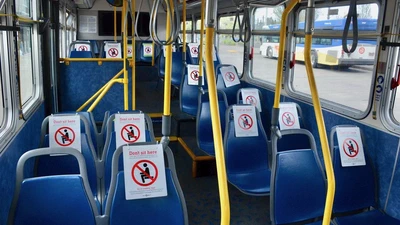
The COVID-19 pandemic has not only disrupted the lives of millions but also created exigent operational and scheduling challenges for public transit agencies. Agencies are struggling to maintain transit accessibility with reduced resources, changing ridership patterns, vehicle capacity constraints due to social distancing, and reduced services due to driver unavailability. A number of transit agencies have also begun to help the local food banks deliver food to shelters, which further strains the available resources if not planned optimally. At the same time, the lack of situational information is creating a challenge for riders who need to understand what seating is available on the vehicles to ensure sufficient distancing. In partnership with the transit agencies of Chattanooga, TN, and Nashville, TN, the proposed research will rapidly develop integrated transit operational optimization algorithms, which will provide proactive scheduling and allocation of vehicles to transit and cargo trips, considering exigent vehicle maintenance requirements (i.e., disinfection). A key component of the research is the design of privacy-preserving camera-based ridership detection methods that can help provide commuters with real-time information on available seats considering social-distancing constraints.

2020 – 2021 Read more
Blockchain Security and Applications featured image

Blockchain Security and Applications

This project studies the security of blockchain-based consensus protocols, secure smart contracts, and applications of blockchains.

2020 – 2022 Read more

Verified Development and Deployment of Multiple Interacting Smart Contracts with VeriSolid

Smart contracts enable the creation of decentralized applications which often handle assets of large value. These decentralized applications are frequently built on multiple …

Keerthi Nelaturu
ICBC 2020

An Empirical Study of Android Security Bulletins in Different Vendors

Mobile devices encroach on almost every part of our lives, including work and leisure, and contain a wealth of personal and sensitive information. It is, therefore, imperative that …

Sadegh Farhang
WWW 2020

Smart Contract Development from the Perspective of Developers: Topics and Issues Discussed on Social Media

Blockchain-based platforms are emerging as a transformative technology that can provide reliability, integrity, and auditability without trusted entities. One of the key features …

avatar
Afiya Ayman
WTSC 2020

Finding Needles in a Moving Haystack: Prioritizing Alerts with Adversarial Reinforcement Learning

Detection of malicious behavior is a fundamental problem in security. One of the major challenges in using detection systems in practice is in dealing with an overwhelming number …

Liang Tong
AAAI 2020